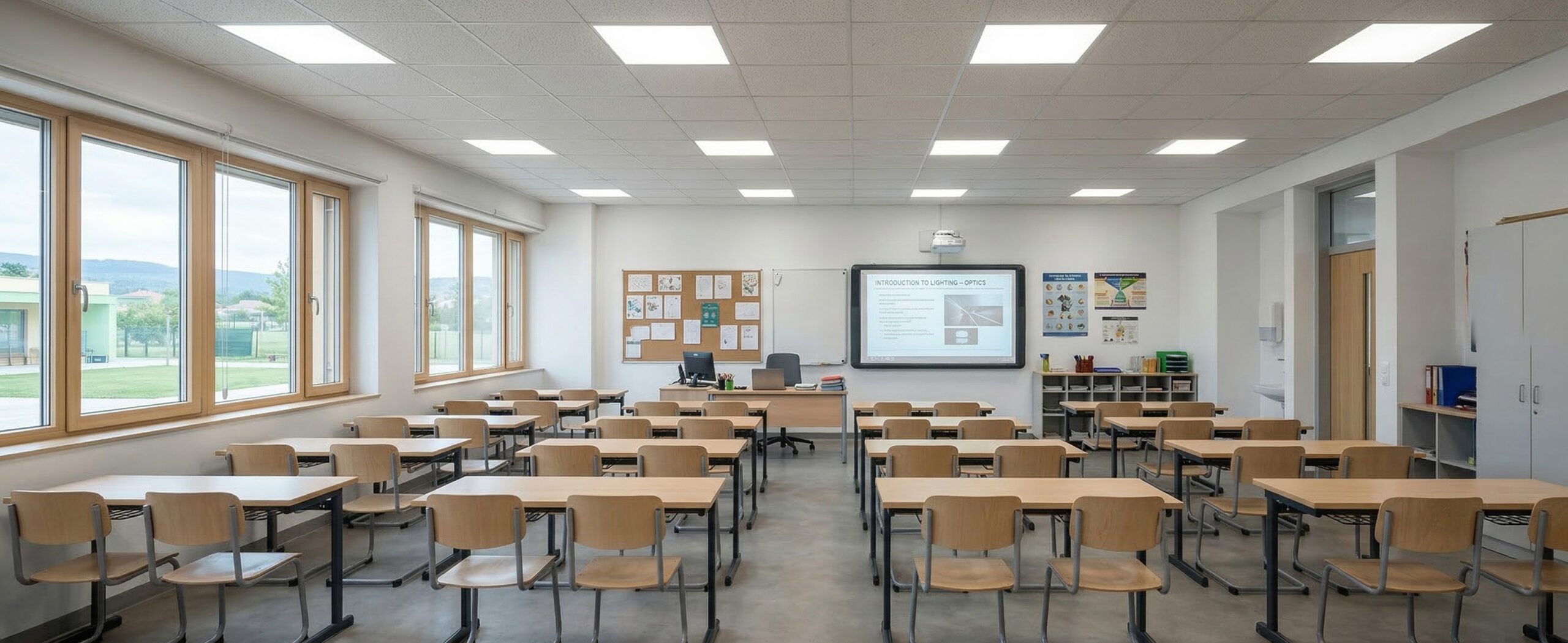
Complete technical reference for classroom, lecture hall, library, laboratory, and school sports hall lighting — UGR control for screens, circadian support for students, and DALI scene management.
📄 Version 1.0 — 2025
📏 EN 12464-1 Educational Areas
⚡ UGR ≤ 19 Screen-Based Learning
🌍 Circadian / Tunable White
Purpose of this guide: Provide lighting designers, architects, school facility managers, and educational authorities with a comprehensive technical reference for educational facility lighting. Covers EN 12464-1 requirements for classrooms and educational spaces, UGR control for screen-based learning, whiteboard vertical illumination, circadian lighting for student alertness, DALI scene management, and energy-efficient design for schools and universities.
1. Introduction & Regulatory Framework
Educational lighting directly affects student learning outcomes, concentration, and wellbeing. Research consistently demonstrates that appropriate illumination — with correct colour temperature, minimal glare, and adequate uniformity — improves reading speed, reduces errors, and enhances student alertness. Conversely, poor lighting causes eye strain, headaches, loss of concentration, and increased behavioural problems in younger students.
Modern educational environments have evolved dramatically: interactive whiteboards, student laptops and tablets, projectors, and collaborative learning spaces demand flexible lighting systems that can adapt to multiple teaching modes within a single room. The traditional "one-switch classroom" is obsolete — effective educational lighting requires scene-based control with at least 3–4 presets per room.
Key Regulatory Framework
Standard / Regulation
Scope
Key Requirements
EN 12464-1:2021
Indoor workplace lighting — educational areas
Illuminance, uniformity, UGR, CRI per educational zone
EN 1838
Emergency lighting
Escape route ≥1 lux, 1-hour duration (schools)
EN 12193
Sports lighting
School sports halls, multi-purpose areas
EN 15193-1
Energy performance of buildings — lighting
LENI calculation, energy benchmarks
IEC 62471
Photobiological safety
Blue light hazard — critical for young students
IEC 62386 (DALI)
Digital addressable lighting interface
Scene control, daylight harvesting, tunable white
National Building Codes
Country-specific energy and fire regulations
Installed power density limits, emergency lighting, accessibility
💡 Design Tip: Educational facility lighting is one of the most cost-effective investments a school can make. Studies show that optimised classroom lighting (correct lux levels, UGR ≤ 19, tunable white) can improve student test scores by 5–14 % and reduce absenteeism. The payback from LED retrofit in schools typically occurs within 2–4 years from energy savings alone — before accounting for educational performance benefits.
2. Lighting Standards & Requirements
EN 12464-1:2021 contains a dedicated section for educational establishments, covering classrooms, lecture halls, laboratories, workshops, libraries, corridors, and sports halls. The standard specifies minimum maintained illuminance, uniformity, UGR limits, and colour rendering for each space type.
EN 12464-1 — Educational Area Requirements
Area / Task
Ēm (lux)
Uo
UGRL
Ra (CRI)
Notes
Classroom — general
300
0.60
19
80
Minimum for all teaching spaces
Classroom — advanced (secondary+)
500
0.60
19
80
Technical drawing, detailed work
Lecture hall / auditorium
500
0.60
19
80
Note-taking, screen visibility
Whiteboard / blackboard
500
0.70
19
80
Vertical illuminance on board surface
Art room
500
0.60
19
90
Colour-critical — CRI 90 required
Science laboratory
500
0.60
19
80
Task lighting on benches
Computer / ICT room
300
0.60
19
80
UGR critical — screen reflections
Workshop (woodwork, metal)
500
0.60
19
80
Machine safety lighting
Library — reading areas
500
0.60
19
80
Extended reading, eye comfort
Library — shelving
200
0.40
19
80
Vertical illuminance on spines
Sports hall (school level)
300
0.60
22
80
EN 12193 Class III (training)
Corridor / circulation
100
0.40
22
80
Wayfinding, transition zones
Staircase
150
0.40
22
80
Safety, step visibility
Staff room
300
0.60
19
80
Rest and preparation area
Office / administration
500
0.60
19
80
VDT-compatible, standard office
Classroom
300
lux (Ēm) minimum
UGR Limit
≤19
for screens
Whiteboard
500
lux (vertical)
Art Room CRI
≥90
Ra (colour-critical)
3. Educational Zones & Illuminance Levels
A typical school or university campus contains a wide variety of space types, each with distinct lighting requirements. Effective design begins with a clear zone classification that maps each space to its EN 12464-1 requirements.
Educational Facility — Lighting Zone Map
CLASSROOMS General: 300 lux
Advanced: 500 lux
UGR ≤ 19
CRI ≥ 80
Tunable 3000–5000 K DALI scenes:
Teach · Screen · Exam
Discussion · Clean
Whiteboard 500 lux vert.
LIBRARY Reading: 500 lux
Shelves: 200 lux vert.
UGR ≤ 19
3000–4000 K
Quiet, comfortable
Extended reading
Low flicker
LABS & SHOPS Labs: 500 lux
Workshops: 500 lux
CRI ≥ 80 (≥90 art)
4000 K
Task lighting on bench
IK08+ workshops
Safety: high-risk task
SPORTS HALL Training: 300 lux
Competition: 500 lux
UGR ≤ 22
4000 K
Ball glare control
IK10 (ball impact)
EN 12193 Class III
CORRIDORS & COMMON Corridors: 100 lux
Stairs: 150 lux
Canteen: 200 lux
IK08 vandal-resistant
Emergency 1 h (schools)
Occupancy sensors
Daylight harvesting
← Teaching-focused zones — — — — — — — — — — — Support & circulation →
All classrooms UGR ≤ 19 · Art rooms CRI ≥ 90 · Emergency lighting in all zones
Figure 1 — Educational facility lighting zone map. Teaching spaces (left) require strict UGR ≤ 19 for screen-based learning and DALI scene control. Support spaces (right) prioritise energy efficiency, vandal resistance, and emergency backup.
The classroom is the most critical space in any educational facility. Modern classroom lighting must satisfy two competing demands: sufficient horizontal illuminance for reading and writing (300–500 lux) and strict glare control (UGR ≤ 19) to prevent screen reflections on laptops, tablets, and interactive displays. Achieving both simultaneously requires careful luminaire selection and positioning.
UGR ≤ 19 — Why It Is Non-Negotiable
The UGR (Unified Glare Rating) limit of 19 is the most important single specification in classroom lighting. Students spend increasingly long periods looking at screens — laptops, tablets, and interactive whiteboards. A UGR above 19 causes visible reflections on screens, eye strain, headaches, and reduced concentration. Luminaires with opal diffusers or bare LED sources rarely achieve UGR ≤ 19; microprismatic diffusers or micro-louvred optics are typically required.
⚠️ Critical — Screen Glare: In classrooms where students use laptops or tablets, UGR ≤ 19 is a hard requirement, not a recommendation. Standard commercial panels with opal diffusers typically achieve UGR 22–25 — this is not compliant for screen-based learning environments. Always specify luminaires with microprismatic or micro-louvred optics verified to UGR ≤ 19 in the specific room geometry.
Classroom Illuminance Requirements
Surface
Illuminance
Uniformity
Notes
Desk plane (horizontal)
300 lux (general), 500 lux (advanced)
Uo ≥ 0.60
Measured at 0.75 m height
Whiteboard (vertical)
500 lux
Uo ≥ 0.70
Dedicated whiteboard luminaires
Wall surfaces
≥75 lux (cylindrical average)
—
Spatial brightness perception
Ceiling
≥50 lux
—
Reduces contrast with luminaires
Classroom Lighting Rule of ThumbA 7 × 9 m classroom with 2.8 m ceiling height typically requires6–8 recessed 600 × 600 mm LED panels (35–45 W each) at UGR ≤ 19+ 2 dedicated whiteboard luminaires (asymmetric distribution)
5. Whiteboard & Interactive Display Lighting
The whiteboard or interactive display is the focal point of classroom instruction. EN 12464-1 requires 500 lux vertical illuminance with a high uniformity (Uo ≥ 0.70) on the board surface. This cannot be achieved with general classroom luminaires alone — dedicated whiteboard luminaires with asymmetric light distribution are essential.
Whiteboard Lighting Specifications
Parameter
Requirement
Notes
Vertical illuminance
500 lux (maintained)
Measured on the board surface
Uniformity
Uo ≥ 0.70
Even illumination across full board width
Glare to students
Luminaire shielded from seated view
Asymmetric distribution directs light onto board only
Colour temperature
Match room general lighting (3000–4000 K)
Avoid mismatch between board and room CCT
Dimming
0–100 % dimmable
Reduce to 0 % during projector/screen use
💡 Design Tip: When an interactive whiteboard or projector is used, the whiteboard luminaires must dim to zero. A DALI "Screen" scene should simultaneously reduce the whiteboard lighting and dim the front row of ceiling luminaires to prevent washout of the projected image — while maintaining rear classroom lighting for note-taking.
Interactive Display vs. Projector — Lighting Impact
Display Technology
Ambient Light Tolerance
Lighting Strategy
Traditional whiteboard
Requires illumination
Whiteboard luminaires ON (500 lux vertical)
Interactive flat panel (LED)
High — works in normal room light
General lighting can stay at 300 lux; dim whiteboard luminaires
Projector (front projection)
Low — sensitive to ambient light
Dim whiteboard luminaires to 0 %, reduce front row ceiling panels to 30 %
Short-throw projector
Medium
Dim whiteboard luminaires to 0 %, front row to 50 %
Each specialist educational space has unique lighting requirements beyond the standard classroom specification.
Libraries
Libraries require 500 lux on reading surfaces with UGR ≤ 19 for extended reading comfort. Bookshelves need 200 lux vertical illuminance on spine labels. A warm colour temperature (3000 K) creates a calming study atmosphere. Flicker-free operation (SVM ≤ 0.4) is especially important for prolonged reading tasks.
Science Laboratories
Laboratories require 500 lux general illuminance with supplementary task lighting on work benches. Chemical labs need sealed luminaires (IP44 minimum) for splash protection. Chemical-resistant materials are recommended. Safety requirements include emergency lighting and clear illumination of safety showers and eyewash stations.
Workshops (Woodwork, Metal, Technology)
Workshops require 500 lux with particular attention to machine safety lighting — no stroboscopic effect on rotating machinery (SVM ≤ 0.4, flicker ≤ 5 % at 100 Hz). Luminaires must be vandal-resistant (IK08 minimum) and dust-protected (IP44). In metalwork workshops, consider higher IP ratings (IP54) for metal dust environments.
Art Rooms
Art rooms are the only educational space that mandates CRI ≥ 90 (EN 12464-1). Accurate colour rendering is essential for painting, drawing, and colour mixing. A CCT of 4000 K (neutral white) or tuneable white is recommended. North-facing daylight supplemented by high-CRI LED lighting is the ideal combination.
Space
Ēm (lux)
CRI
Special Requirements
Library (reading)
500
80
Low UGR, warm CCT (3000 K), flicker-free
Library (shelves)
200 vert.
80
Vertical illuminance on book spines
Science lab
500
80
IP44, chemical-resistant, emergency
Workshop
500
80
IK08, flicker-free (machines), IP44
Art room
500
90
Colour-critical, tunable white preferred
Music room
300
80
Sheet music reading, tuneable for performance
7. Sports Halls & Multi-Purpose Areas
School sports halls serve multiple functions: physical education, competitions, assemblies, examinations, and community events. Lighting must be versatile, impact-resistant, and glare-controlled for ball sports.
Sports Hall Lighting Requirements (EN 12193)
Level
EN 12193 Class
Illuminance
Uniformity
Glare (GR)
Application
Training
Class III
300 lux
Uo ≥ 0.60
GR ≤ 50
School PE lessons
Competition
Class II
500 lux
Uo ≥ 0.70
GR ≤ 45
Interschool competitions
Assembly / exam
—
300 lux
Uo ≥ 0.60
UGR ≤ 22
Non-sport use
ℹ️ Impact Resistance: Sports hall luminaires must withstand ball impacts — IK10 rating is the minimum recommendation. Luminaires should also have protective guards or polycarbonate covers. Mounting height is typically 6–9 m, above the playing area to prevent direct ball strikes, but protection is still essential for errant shots.
8. Circadian Lighting & Student Performance
Research in educational neuroscience shows that lighting colour temperature significantly affects student alertness, concentration, and cognitive performance. Cooler light (5000 K) increases alertness and task focus, while warmer light (3000 K) promotes calm and creative thinking. Tuneable-white (HCL) systems allow teachers to adjust lighting to match the activity.
Recommended CCT Profiles for Classrooms
Activity
Recommended CCT
Intensity
Rationale
Morning lessons (mathematics, science)
4000–5000 K (cool)
500 lux
Maximum alertness and concentration
Standard teaching
4000 K (neutral)
300 lux
Balanced alertness and comfort
Reading / quiet work
3000–3500 K (warm)
300–500 lux
Calm focus, reduced stimulation
Creative / art activities
4000 K (neutral)
500 lux
Accurate colour perception
Screen / projector use
3000 K (warm, reduced)
150–200 lux
Reduced ambient for screen contrast
Examination
4000 K
500 lux
Uniform, alert, no distractions
Post-lunch (afternoon)
5000 K (cool boost)
500 lux
Combat post-lunch drowsiness
✅ Evidence-Based Benefit: A landmark study (Barkmann et al., 2012) demonstrated that tuneable-white lighting in classrooms improved student reading speed by 35 % and reduced errors by 45 % when using a dynamic cool-light profile during concentration tasks. Multiple subsequent studies have confirmed that circadian-aligned lighting improves alertness, reduces fidgeting, and enhances test performance in school-age students.
9. Controls, DALI Scenes & Daylight Harvesting
Scene-based control transforms classroom lighting from a static utility into a dynamic teaching tool. A minimum of four DALI scenes per classroom is recommended, with daylight-responsive dimming for energy savings.
Recommended DALI Scenes for Classrooms
Scene
Ceiling Panels
Whiteboard
CCT
Use Case
Teach
100 %
100 %
4000 K
Standard instruction — maximum visibility
Screen
50 % (rear), 30 % (front)
0 %
3000 K
Projector / interactive display in use
Exam
100 %
50 %
4000 K
Uniform, bright, alert atmosphere
Discussion
70 %
0 %
3500 K
Group work, relaxed, collaborative
Clean
100 %
100 %
5000 K
After-hours cleaning — maximum brightness
Classroom DALI Zone Layout — Plan View
WHITEBOARD
ZONE A — Front Row
ZONE B — Middle & Rear Rows
WB luminaires (ZONE C)
Door
Scene: "Screen"
Zone A: 30 %
Zone B: 50 %
Zone C (WB): 0 % Scene: "Teach"
Zone A: 100 %
Zone B: 100 %
Zone C (WB): 100 %
Figure 2 — Classroom DALI zone layout showing three independently controllable zones: Zone A (front row, dimmed during projector use), Zone B (middle/rear rows, maintained for note-taking), Zone C (whiteboard luminaires, off during screen use). Each scene adjusts all three zones simultaneously.
Daylight Harvesting
Classrooms with windows offer significant energy savings through daylight-responsive dimming. A daylight sensor mounted on the ceiling near the window wall measures ambient light and adjusts the nearest luminaire row accordingly. EN 15193-1 includes daylight supply factors for LENI (Lighting Energy Numeric Indicator) calculations. Typical savings from daylight harvesting in classrooms with good fenestration: 30–50 % of annual lighting energy.
DALI Scenes
4–5
per classroom
Daylight Saving
30–50
% energy
Corridor Saving
50–70
% (occupancy)
Protocol
DALI-2
recommended
10. Energy Efficiency & Sustainability Targets
Schools and universities are public buildings with limited budgets and high operating hours (typically 2,000–3,000 hours per year). LED retrofit is one of the most cost-effective energy improvements available, with payback periods of 2–4 years.
Installed Power Density Benchmarks
Space
Legacy (W/m²)
LED Only (W/m²)
LED + Controls (W/m²)
Classroom
12–18
5–8
3–5
Library
12–16
6–9
4–6
Laboratory
14–20
7–10
5–7
Corridor
8–12
3–5
1.5–3
Sports hall
15–25
8–12
6–9
✅ ROI Example: A typical primary school (30 classrooms, 2,500 m²) replacing fluorescent T8/T5 luminaires with LED panels and DALI controls can reduce annual lighting energy from approximately 95,000 kWh to 30,000 kWh — a saving of €13,000/year at €0.20/kWh. With an investment of €35,000–45,000, the payback period is 2.5–3.5 years. LED luminaires then provide an additional 15+ years of reduced energy and maintenance costs.
11. Common Mistakes to Avoid
#
Mistake
Consequence
Correct Approach
1
Opal-diffuser panels in screen-based classrooms
UGR 22–25, screen reflections, eye strain
Microprismatic panels verified to UGR ≤ 19
2
No dedicated whiteboard lighting
Uneven board illumination, poor visibility
Asymmetric wall-wash luminaires, 500 lux vertical
3
Single on/off switch for entire classroom
Cannot adapt to different teaching modes
DALI with 4–5 scenes (Teach, Screen, Exam, etc.)
4
CRI 80 in art rooms
Inaccurate colour perception for students
CRI ≥ 90 required by EN 12464-1 for art rooms
5
No daylight harvesting in windowed classrooms
Wasted energy — lights at 100 % even in daylight
Daylight sensor + row dimming near windows
6
Non-impact-resistant luminaires in corridors/sports
Damage from ball impact, vandalism
IK08+ for corridors, IK10 for sports halls
7
Fluorescent lighting in workshops (flicker risk)
Stroboscopic effect on rotating machines — safety hazard
LED with SVM ≤ 0.4, flicker ≤ 5 % at 100 Hz
8
No emergency lighting in school
Non-compliance, safety hazard during evacuation
EN 1838 compliant, 1-hour emergency in all occupied spaces
12. TECHLUMEN Product Recommendations
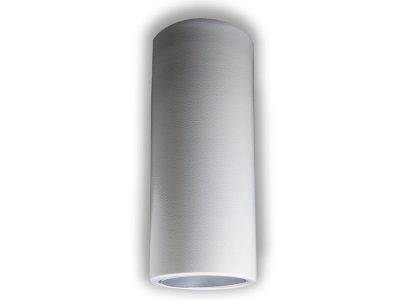
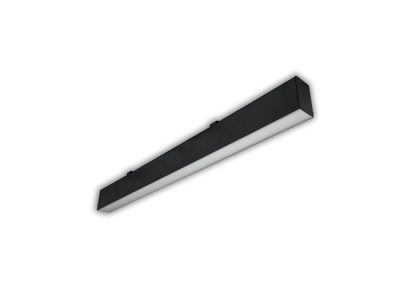
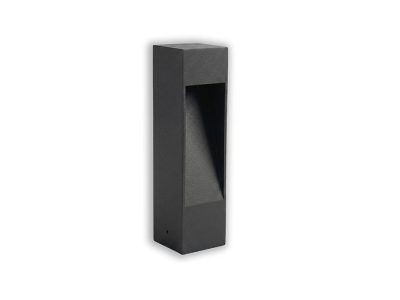
TECHLUMEN manufactures a comprehensive range of LED luminaires for educational facilities — from LED panels and linear luminaires for classrooms, to downlights for corridors, high-bays for sports halls, and floodlights for outdoor fields.
Classrooms with intensive screen use — ultra-low glare (UGR <16), "invisible light source" effect, ideal for ICT rooms and VDT-heavy environments
💡 Panel Selection Guide: For standard classrooms, the QL-60 (UGR <19, cost-efficient) is the go-to choice. For classrooms requiring tunable white (HCL) or CRI 90 (art rooms), choose the QUDO-60. For intensive screen-based learning (ICT labs, computer rooms), the VISION (UGR <16) provides the ultimate glare-free environment. The QL-12030 suits linear ceiling grid formats (1200 × 300 mm).
Outdoor sports fields, athletics tracks, playgrounds — competition and training lighting
Application Matrix
Educational Zone
TECHLUMEN Product
Emergency
Notes
Classrooms (standard)
QL-60 or QUDO-60
Built-in Em 3 h
UGR <19, DALI scenes
Classrooms (ICT / screens)
VISION (UGR <16)
Built-in Em 3 h
Ultra-low glare for screen-heavy use
Classrooms (architectural)
L-E-XT (suspended/recessed)
Built-in Em 3 h
CRI >90, continuous lines, DALI
Art rooms
QUDO-60 (CRI 90) or L-E-XT
Built-in Em 3 h
Colour-critical, CRI ≥ 90
Libraries
QL-60 or QUDO-60 (3000 K)
Built-in Em 3 h
Warm, comfortable, flicker-free
Science labs
QL-60 or QUDO-60 (IP54)
Built-in Em 3 h
Sealed panel, splash-proof
Lecture halls
QUDO-60 (tunable) or L-E-XT
Built-in Em 3 h
DALI zoned, Screen scene
Corridors / stairs
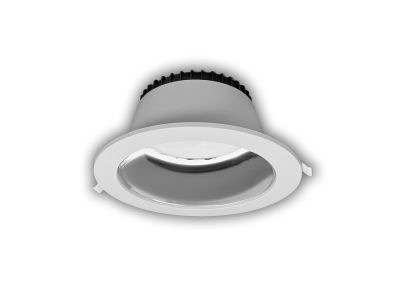
DL-17 or DL-23
DL-17/DL-23 Em 3 h
Recessed downlights, occupancy sensor
Indoor sports hall
VELISTI + HBR
VELISTI + emergency
VELISTI (linear), HBR (high-bay), IK10
Outdoor sports fields
FL-I-1 / FL-I-2
—
Floodlights, competition & training
Workshops
INDUS (IP66, IK08)
VELISTI + emergency
Flicker-free, dust-protected
Offices / admin
QL-60 or VISION
Built-in Em 3 h
UGR <19, VDT-compatible
Exterior / parking
DROMOS (IP66)
—
School entrance, car park
Case Study — Pinewood, The American International School, Thessaloniki
Pinewood — The American International School of Thessaloniki
Exterior night view: new campus building with athletics track, architectural wooden louver façade, and LED floodlighting — a complete TECHLUMEN installation across every educational zone.
Use: Pinewood-1st.jpg · 1200 × 800px
Anatolia College (founded 1886) and Pinewood — The American International School (founded 1950) are distinguished educational institutions located in Thessaloniki, known for their rich history and commitment to academic excellence. TECHLUMEN LED luminaires illuminate the newly built Pinewood campus facilities — a landmark educational lighting project covering classrooms, science laboratories, a music room, library spaces, a sports hall, corridors, offices, and exterior areas.
Project Detail
Information
Client
Pinewood — The American International School of Thessaloniki (Anatolia College campus)
Architectural design
Micromega, Tombazis & Associates Architects
Lighting design
IFI Lighting
Construction
ΕΤΕΘ
Scope
Complete interior and exterior LED lighting for new campus building
TECHLUMEN products installed
22 product families (see below)
TECHLUMEN Products Installed at Pinewood
Zone
Products
Application
Classrooms & lecture rooms
L-E-XT, LN-XT
Linear LED on acoustic ceiling, uniform illumination, whiteboard zone lighting
Science laboratories
L-E-XT, LN-XT
Linear LED above lab benches, chemical-resistant environment, splash-proof zones
✅ 22 Product Families — One Campus: The Pinewood project demonstrates TECHLUMEN's ability to serve an entire educational campus from a single manufacturer — classrooms (linear LED), laboratories (sealed linear), music (IRIS suspended), sports (high-bay), corridors (downlights), offices (task/accent), and extensive exterior landscape & architectural lighting. Lighting design by IFI Lighting; architectural design by Tombazis & Associates.
✅ Design Support: TECHLUMEN provides free photometric calculations, DIALux EVO simulations, and luminaire selection support for educational facility projects — from individual classrooms to complete campus designs. Contact our engineering team at [email protected] for project-specific educational lighting design.
13. Frequently Asked Questions (FAQ)
Why is UGR ≤ 19 so important in classrooms?
UGR (Unified Glare Rating) measures the discomfort glare experienced by occupants. A UGR above 19 causes visible reflections on laptop and tablet screens, forcing students to adjust their seating position or shield their eyes — both of which reduce concentration and learning effectiveness. EN 12464-1 specifies UGR ≤ 19 for all classrooms. Achieving this requires microprismatic or micro-louvred diffusers rather than standard opal panels, which typically achieve only UGR 22–25.
Does tunable white (HCL) lighting really improve student performance?
Yes. Multiple peer-reviewed studies demonstrate measurable improvements in student performance under tuneable-white lighting. The most cited study (Barkmann et al., 2012) found a 35 % improvement in reading speed and 45 % reduction in errors when using dynamic cool-light profiles during concentration tasks. Other studies report reduced fidgeting, improved attention span, and lower cortisol levels (indicating reduced stress). The effect is most pronounced in primary and secondary school students, whose circadian systems are more sensitive to light cues.
How many DALI scenes does a classroom need?
A minimum of four scenes is recommended: "Teach" (full brightness, 4000 K), "Screen" (front rows dimmed, whiteboard off, 3000 K), "Exam" (full brightness, uniform), and "Discussion" (moderate brightness, warm). A fifth "Clean" scene (full brightness, cool white) is useful for after-hours maintenance. The scenes should be accessible via a simple wall panel or remote — teachers should not need to understand DALI programming to use them.
What lighting is required for school sports halls?
EN 12193 specifies lighting for sports facilities. For school PE (Class III), 300 lux with Uo ≥ 0.60 and glare rating GR ≤ 50 is required. For interschool competitions (Class II), 500 lux with Uo ≥ 0.70 and GR ≤ 45. Luminaires must be IK10 (ball-impact resistant) with protective guards. When the hall is used for assemblies or exams, a separate lighting scene at 300 lux with UGR ≤ 22 should be available. DALI control enables switching between sports, assembly, and exam modes.
Is CRI 80 acceptable for all educational spaces?
CRI 80 is acceptable for most educational spaces — classrooms, corridors, libraries, laboratories, and sports halls. The exception is art rooms, where EN 12464-1 specifically requires CRI ≥ 90 because students must accurately perceive and mix colours. Consider specifying CRI 90 for science laboratories as well if colour discrimination is important for experiments. Some schools choose CRI 90 throughout for a consistent, higher-quality visual environment.
What is the typical payback period for LED retrofit in schools?
For a typical school replacing fluorescent T8/T5 luminaires with LED panels and DALI controls, the payback period is 2–4 years depending on operating hours, energy costs, and the scope of controls (dimming, daylight harvesting, occupancy). Schools operating 2,500+ hours per year with high electricity costs achieve the fastest payback. Many EU countries offer subsidies or energy efficiency grants for public building LED retrofits that can further reduce the payback period to under 2 years.
Related Standards & References
EN 12464-1:2021 — Light and lighting — Indoor work places (educational areas)
EN 1838:2013 — Lighting applications — Emergency lighting
EN 12193 — Light and lighting — Sports lighting
EN 15193-1 — Energy performance of buildings — Lighting (LENI calculation)
IEC 62471 — Photobiological safety of lamps and lamp systems
IEC 62386 — Digital addressable lighting interface (DALI)
EN 60598-1 — Luminaires — General requirements and tests
IES TM-30-20 — Method for evaluating light source colour rendition
IEEE 1789 — Recommended practices for modulating current in LED lighting
National Building Codes — Country-specific energy performance and fire reguling
National Building Codes — Country-specific energy performance and fire regulations for educational buildings