
Lighting Guide for Dairy Cow Farms
Optimal Artificial Light Spectrum for Maximum Milk Production
Why Lighting Matters
Lighting plays a vital role in both milk production and the well-being of dairy cows. Research has shown that carefully adjusting the intensity, spectrum, and duration of artificial lighting can significantly increase milk yield.
Specifically, providing a long-day photoperiod has been associated with a ~5-15% increase in daily milk output compared to a short-day regimen. Optimized LED lighting in facilities can improve hormonal balance (affecting melatonin, prolactin, etc.) to enhance milk productivity.
Below are the key findings for optimal spectrum and lighting settings in an indoor dairy cow facility.
Light Spectrum and Wavelengths
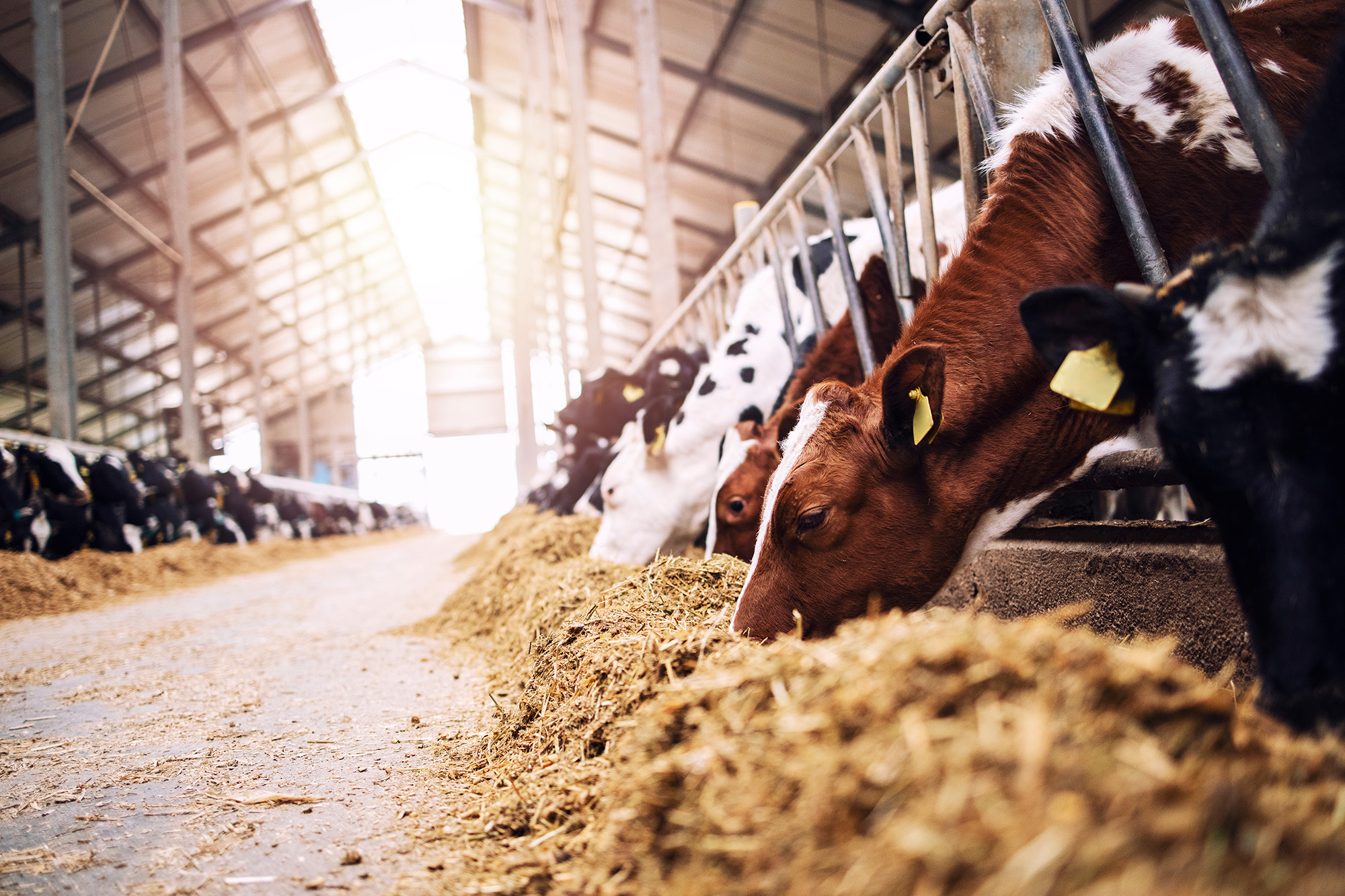
Cows have dichromatic vision, with photoreceptors primarily focusing on blue and green wavelengths. The visible spectrum perceived by a cow extends approximately from 400 nm to 680 nm, with peak sensitivity at around 451 nm (blue) and 555 nm (green).
Therefore, optimal artificial lighting should emit strongly within this range. A "full" spectrum that includes the critical blue-green wavelengths allows cows to see more clearly, reducing stress and improving desired behaviors (e.g., easy movement toward the milking station).
Cool white light resembling daylight is preferred over "warm" yellowish light, as it provides this balanced spectrum. For example, cool white LED lamps (broad spectrum) outperform traditional sodium lamps (very warm color ~2000 K), as the latter emit primarily at longer wavelengths and lack sufficient blue spectrum.
The goal is therefore artificial light that covers the entire 400-700 nm spectrum, with emphasis on 450 nm and 550 nm, to fully utilize the cow's visual capability.
Cow Visible Spectrum (400-680nm)
Peak sensitivity at 451nm (blue) and 555nm (green)
Color Temperature (CCT)
The color temperature of light (Correlated Color Temperature, CCT) relates to the "warmth" or "coolness" of the shade. Natural daylight corresponds to approximately 6500 K, while a typical white LED lamp can be adjusted to various temperatures.
For cows, moderate to high CCT is recommended, approximately 4000-5000 K, meaning cool white light. This color temperature range provides a balance of green-blue spectrum that resembles daylight and within which cows see better.
Additionally, lighting at this scale (e.g., 5000 K) offers a high Color Rendering Index (CRI), making it easier for staff to observe the condition of animals (skin color, mucous membranes, etc.) – although CRI is less important for the cows themselves.
💡 About Red Light
Note that red light (low CCT ~1800-2000 K) is perceived by cows as almost gray – they don't distinguish the red color. This property is utilized at night, as red-tinted lighting can be used for barn inspection without disturbing the animals.
Light Intensity (Lux)
Light intensity is measured in lux and is a critical factor for the effect on the endocrine system of cows. Studies indicate that lighting levels above 150 lux at cow eye height, for several hours daily, can stimulate production through hormonal changes (decreased melatonin during light, increased IGF-1, etc.).
Practically, 150-200 lux are considered adequate in the area where cows move and rest. In fact, providing lighting ≥150 lux for 16-18 hours has been associated with a milk production increase of 7-8% (with a time lag of about 2-3 weeks until the effect manifests).
Conversely, during the dark period, intensity should drop to very low levels (ideally below 50 lux, or even <10 lux) so that melatonin production is not suppressed.
Living Area
Minimum level at cow eye height (target ~200 lux)
Milking Area
For maximum efficiency and comfort for both animals and workers
Night Phase
Ideally <10 lux for proper darkness
📈 Practical Application
In practice, 200 lux of general lighting in the barn is considered a good target level during the light phase. These levels ensure that cows move comfortably without shadowy areas that might startle them, while staff can effectively inspect the herd.
Photoperiod (Lighting Duration)
The term photoperiod refers to the duration of daily light exposure. The Long-Day Photoperiod – typically 16-18 hours of light and 6-8 hours of darkness – is beneficial for dairy cows.
This lighting scheme artificially extends the animals' "day" during winter or in enclosed barns, resulting in higher secretion of prolactin and IGF-1, which stimulate milk production.
Importantly, an uninterrupted dark period of 6-8 hours must be provided – continuous exposure to light 24 hours a day not only does not improve production but can suppress it.
Ideal 24-Hour Cycle for Lactating Cows
(150-200 lux)
(<50 lux)
☀️ Light Phase
Stimulates milk production
Increases IGF-1 & prolactin
🌙 Dark Phase
Essential for melatonin production
Supports circadian rhythm
⚠️ Warning: Avoid 24-hour lighting!
It has been found that 24-hour lighting disrupts the normal circadian rhythm, leading to reduced melatonin levels and possibly increased stress, without additional milk production. Therefore, the ideal photoperiod for lactating cows is approximately 16 hours of light (of adequate intensity) followed by ~8 hours of darkness (<50 lux) every 24 hours.
☀Lactating Cows
16-18 hours light / 6-8 hours dark
Long-day photoperiod increases prolactin and IGF-1 secretion, which stimulates milk production.
🌙Dry Cows (before calving)
8 hours light / 16 hours dark
Short-day photoperiod acts as a "reset" of the system – reduces prolactin levels during the dry period so cows respond better to long-day photoperiod when the next lactation begins.
Management for Different Animal Groups
Managing lighting for different animal groups (lactating vs. dry) requires separate spaces or the ability to fully darken dry cows.
This is particularly challenging in summer in Greece when the natural day can exceed 14-15 hours. In these cases, shading or enclosed space may be needed for dry cows, while for lactating cows simply no supplementary artificial light is provided beyond natural daylight.
Research shows that cows that spent their dry period under short days have increased feed intake during that phase and produce more milk in the next lactation.
Spectral Changes Throughout the Day
A question is whether spectrum or light intensity variation is needed during the day to simulate the natural cycle (dawn-day-dusk).
Generally, gradual transition is recommended at the start and end of the photoperiod – e.g., LED lamps slowly increasing intensity in the morning (dimmer) mimicking dawn, and the reverse in the evening. This prevents sudden changes that could stress the animals.
In terms of spectrum, some modern facilities use warmer (reddish) light at dusk/night. As mentioned, cattle don't perceive red light as an intense stimulus – essentially it doesn't stimulate their photoreceptors – so it can be used for nighttime staff inspections without "breaking" the cows' dark phase.
⚠️ Avoid Blue Light at Night
The presence of blue-rich light during nighttime hours should be avoided, as the blue spectrum disproportionately suppresses melatonin and causes greater disruption to circadian rhythms compared to longer wavelength light (e.g., yellowish).
💡 Ideal Setup
Ideally, the lighting system will provide cool light during the "day" (with full spectrum) and possibly very low-intensity red light in absolute darkness, if safety or supervision lighting is required.
Impact of Artificial Lighting on Health and Welfare
Proper lighting management increases milk production by 5-15%
Positive Effects of Proper Lighting
Proper lighting not only increases production but also benefits animal health. Exposure to extended daylight reduces melatonin levels during light time, which is associated with higher activity and feed intake, while simultaneously increasing prolactin and IGF-1 that promote milk production.
At the same time, reduced cortisol (stress hormone) has been observed when cows are under appropriate lighting, suggesting they are not stressed by the environment.
Proper photoperiod also contributes to better immune function and fertility: cows under optimal lighting show more stable estrus cycles and easier detection (also due to good lighting for farmers).
Additionally, a well-lit barn without dark corners reduces startle responses and stress in cows – as shadows and sudden light/dark contrasts can frighten them due to their limited depth perception.
Increased Milk Production
+5-15% increase in daily milk yield with proper photoperiod
Young Animal Development
Improved calf growth with proper lighting
Higher Feed Intake
Increased activity and feed consumption
Less Stress
Reduced cortisol and uniform lighting without shadows
Better Fertility
More stable estrus cycles and easier detection
Easier Movement
Comfortable movement without shadowy areas that frighten
⚠️ Negative Effects of Improper Lighting
- Lighting <100 lux for many hours can lead to reduced vision and reluctance of animals to move or feed at night
- Prolonged continuous light exposure (without darkness) disrupts sleep and rest rhythms, increasing the risk of metabolic disorders or predisposition to disease
- Lack of dark phase can mean lower melatonin production in milk (which has antioxidant properties) and may negatively affect udder health and milk quality
- It has been recognized (even by WHO for humans) that nighttime light acts as "pollution," potentially linked to long-term health problems
Differences by Lactation Stage
First-Lactation vs Mature Cows
First-lactation cows (first lactation) may respond somewhat differently to lighting compared to mature cows with multiple lactations.
Some studies have observed that the effect of long-day photoperiod on production increase is more pronounced in mature cows, while in first-lactation cows the difference may be smaller or statistically insignificant.
For example, in one experiment, the 18 hours light / 6 hours dark scheme in winter increased production by ~7% in multiparous cows, but had no noteworthy effect on first-lactation cows. This may be because young cows are still developing and have different hormonal dynamics.
Dry Cows - The Importance of Short-Day Photoperiod
As mentioned, dry cows should receive different lighting than lactating cows. Maintaining a short-day photoperiod before calving results in over-response after calving when these cows are again exposed to long-day photoperiod.
These cows have higher milk production in the first weeks of the new lactation compared to those who did not have this "winter" light pause.
Moreover, dry matter intake during the dry period increases under conditions of extended darkness, helping cows maintain body reserves for the upcoming lactation.
💡 Conclusion
Lighting can be used as a management tool depending on the stage: different programs for heifers, for cows in full lactation, and for cows in the dry period.
Recommended Technical Lighting Specifications
| Parameter | Recommended Setting / Value |
|---|---|
| 🕑 Photoperiod (hours light/dark) |
16-18 hours light and 6-8 hours dark per 24 hours for lactating cows
|
| 💡 Light Intensity |
150-200 lux at cow level during the light period as minimum (target ~200 lux)
|
| 🌈 Light Spectrum (wavelengths) |
Full visible spectrum 400-700nm with emphasis on blue (~450nm) and green (~550nm) that cows perceive better
|
| 🌡️ Color Temperature |
4000-5000 K (neutral to cool white light) to simulate natural daylight with high efficiency in blue/green
|
| 🔄 Daily Variation |
Gradual dimming at the start and end of the day for smooth transition
|
📚 Conclusion
The scientifically documented lighting strategy for maximizing milk production on dairy farms includes providing a cool, broad spectrum light (~4000-5000 K) with adequate intensity (~200 lux) for 16-18 hours per day, followed by a dark interval of 6-8 hours.
This lighting program (combined with appropriate nutrition and management) increases daily milk production and improves overall health and welfare of cows.
Dry cows should conversely receive short days and long nights, in order to have optimal performance in the next lactation.
Finally, the flexibility of modern LEDs allows for adjustments such as gradual dimming and red night lighting, which support circadian rhythms and minimize stress. By adopting these best lighting practices, a dairy farm can achieve higher milk production, better fertility, and healthier, calmer cows.
VELISTI-C Luminaires
Ideal lighting for modern dairy farms
As mentioned above, milk production depends not only on nutrition and care – it also depends on light. The VELISTI-C luminaire series, with color temperature specifically designed for dairy farms, offers optimized light spectrum for enhancing milk production, in perfect harmony with cow physiology.
Spectrum designed for maximum performance
With strong emission in the blue (450nm) and green (550nm) region – the zones that cattle perceive best – VELISTI-C supports the animals' natural vision, reduces stress, and stimulates milk-producing hormones.
Efficiency and durability
High-efficiency LED technology ensures strong lighting with low consumption, while the sealed aluminum body (IP66) provides excellent protection from moisture, ammonia, and dust – ideal for barn environments.
Smart control via DALI
DALI dimming capability allows gradual intensity adjustment, simulating natural sunrise and sunset. This reduces sudden changes that stress animals, and supports their natural circadian rhythm.
Installation flexibility
Available in multiple lengths and power versions, VELISTI-C supports linear connection, making it ideal for uniform lighting of large barn spaces, waiting areas, and milking parlors.
Why VELISTI-C?
Because it combines physiologically appropriate spectrum, European build quality, and high energy efficiency, fully meeting the requirements of a modern dairy production unit.
Scientific References
References for Artificial Lighting and Milk Production
- Dahl, G. E., Buchanan, B. A., & Tucker, H. A. (2000). Photoperiodic Effects on Dairy Cattle: A Review. Journal of Dairy Science, 83(4), 885-893. https://pubmed.ncbi.nlm.nih.gov/10791806/
- Velasco, J. M., Reid, E. D., Fried, K. K., Gressley, T. F., Wallace, R. L., & Dahl, G. E. (2008). Short-day photoperiod increases milk yield in cows with a reduced dry period length. Journal of Dairy Science, 91(9), 3467-3473. https://pubmed.ncbi.nlm.nih.gov/18765605/
- Wall, E. H., Auchtung, T. L., Dahl, G. E., Ellis, S. E., & McFadden, T. B. (2005). Exposure to short day photoperiod during the dry period enhances mammary growth in dairy cows. Journal of Dairy Science, 88(6), 1994-2003. https://pubmed.ncbi.nlm.nih.gov/15905429/
- Muthuramalingam, T., et al. (2021). Effects of photoperiod and light intensity on milk production and milk composition in dairy cows. Journal of Animal Science and Technology, 63(3), 626-637. https://www.ejast.org/archive/view_article?pid=jast-63-3-626
- Walker, W. H., et al. (2022). Circadian clocks and their integration with metabolic and reproductive physiology of dairy cows. Frontiers in Animal Science, 3, 839906. https://www.frontiersin.org/articles/10.3389/fanim.2022.839906/full